


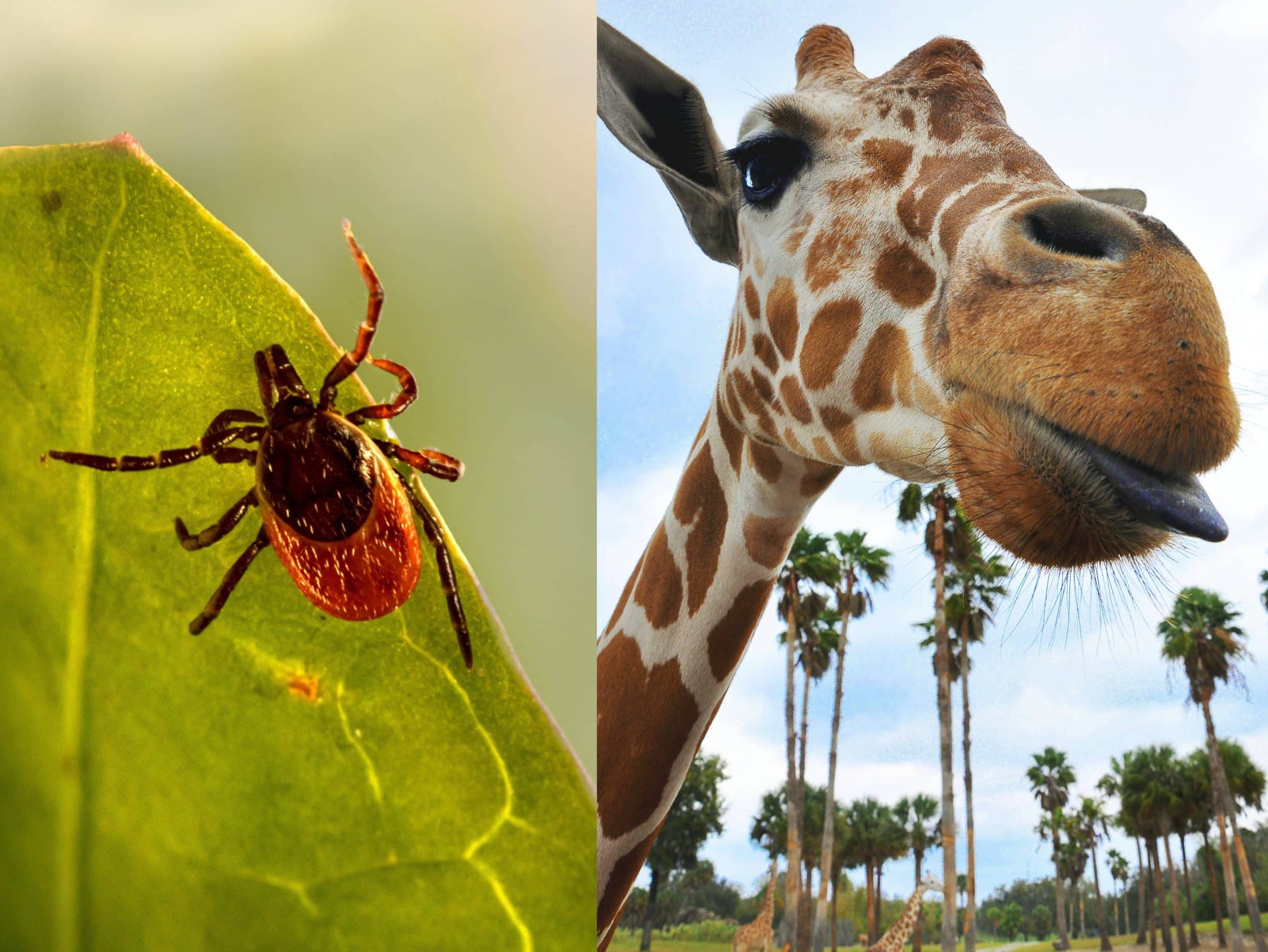

While many fear leaving home for places with things like malaria and typhoid, one of the most debilitating infections may be in the backyard. With an estimated 476,000 people potentially diagnosed a year in the US alone,1 Lyme disease, when chronic, carries a lower quality of life than some of the most painful conditions out there — including Fibromyalgia.2 But that’s not the whole story, when caught early, Lyme is often curable. I know, because I had it.
Part of being an ivri is self-sufficiency, with health at the cornerstone. With tick season approaching and recent Lyme vaccine news, I want to tell you my story, share what I learned, and equip you to keep yourself and your peeps safe.
My hope that this post is one of many posts regarding revelations about health as part of my “A Slave to Know One” post category. However, those posts are a long way out.



Before we get started
This post is a break from the Halfway Around the World on the Flip of a Coin. If you haven’t already, catch our last post Mobile Trophies.
This is a 2 part blog post
Keep scrolling to read the full post or click the icons below to skip ahead

Adventure
My Lyme story

Revelation
Lyme facts, myths, and tips
Disclaimer
I am not a doctor…or a medical professional of any kind. The stories and information provided here reflect my own personal experience, opinions, and research available at time of writing. Content is provided for information and educational purposes only and is not a substitute for professional medical advice. See full disclaimer here.
So without further ado the story begins
What’s ironic is that those who don’t have the courage to take risks and those who do, experience the same amount of fear in life. The only difference is that those who don’t take chances worry about trivial things. If you’re going to have to overcome your fear and doubts anyway, you might as well make it count. – John C. Maxwell
Something’s just off
A friend and I were making our way back from a several-mile walk to and along the Lake Michigan shoreline near my house. An extreme introvert and nature lover, she was the type of person who would hike and camp for days in the wilderness alone. When together, I considered it a compliment that she felt comfortable pushing me physically and normally, I welcomed it.
But as we were about to begin the next leg of our excursion — which most certainly involved a long-desired bubble tea — something was off, really off. Disorientation is the first word that comes to mind. Heat stroke? I’d had it before, this wasn’t that. Then there was my hip — it was like something got jammed – every step became conscious with the kind of mental pain that comes when everything in your body is screaming something is wrong.
As this was hitting me, I began falling behind her pace. “Stop.”
She turned. One look was all it took. We decided to skip bubble tea. It was a good thing too, as I felt like I barely made the half-mile walk home.
Safe in the house, I felt confused. Not in excruciating pain, but the unsettling kind that makes you question any dependence on yourself. Resting seemed to calm things down. Maybe just a fluke — low blood sugars or something. I encouraged my friend to head out and took the evening to rest.
Summer shivers
The next morning, I woke up shivering — uncontrollable shivering, under several layers of blankets, in the dead of summer. Ironically, I wasn’t cold, but I couldn’t stop — for 2 hours. As I got my body under control and got up to head to urgent care, the locked-up feeling from my hip had spread to my neck. I suddenly knew what this was — Lyme disease.
Growing up in Wisconsin, I had more than one friend who’d had the struggle. Several weeks earlier I’d gone home and camped for a week — places I’d been going to for decades without ever hearing of a Lyme infection. After I went to a nationwide conference and was flying weekly to California for work.
At urgent care, I made my case. The doctor behaved as though I was some great medical mystery.
“This is Lyme, West Nile, or we are off in the wild blue yonder,” I pressed.
Her urgency still didn’t rise. “It takes 2 weeks for antibodies to present. We don’t want a false negative.”
I knew Lyme was curable and that I had 6 to 8 weeks to treat it. I should have demanded the test right then and there. I didn’t — this was my first mistake. Instead, I got the “let’s monitor with no treatment or diagnosis” response.
By evening, symptoms got worse. I went remote that week, but by the time I logged in Pacific Time Monday, it felt like someone had shoved a rod down the right side of my head, down my back, and out through my right hip. I remember lying on the old purple couch in my living room, laptop on my chest, plowing through hours of work in now, excruciating pain. I try not to think about how much damage I did with ibuprofen.
Deception
By week’s end things seemed to calm down. Whatever this was, maybe I was fighting it? We were in the middle of a critical project at work and I could see straight — so why not jump on a plane and trek across country alone? This was my second mistake.
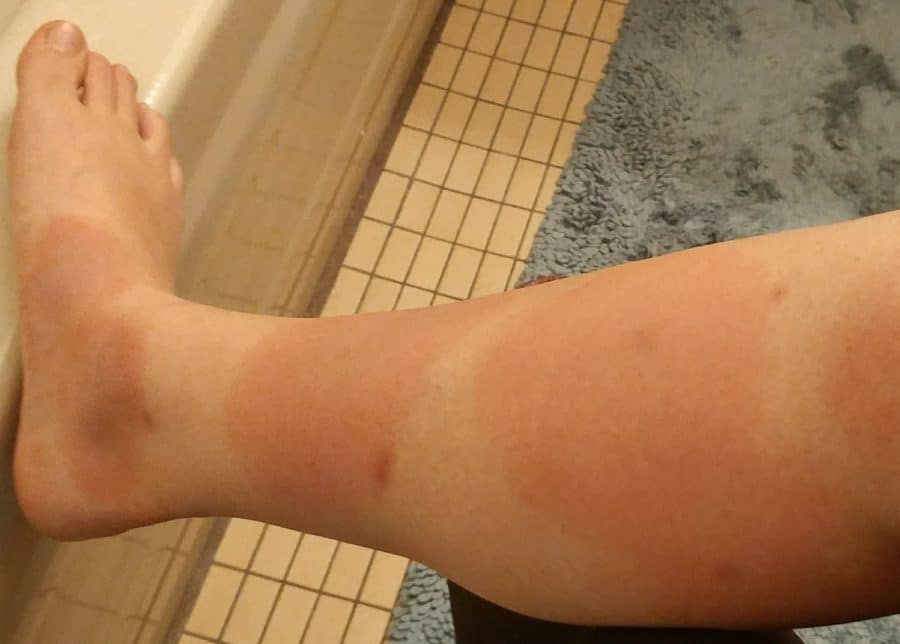
Tuesday by dinner the disorientation had returned to the point I was scared I wouldn’t make the drive back to my hotel. The next morning, looking into the huge hotel mirrors, I saw a big brown spot — probably 4 inches in diameter — staring back at me. My body was covered in them. Overnight I had magically turned into a giraffe.
I picked an outfit covering wrist to ankles and made my way to the office.
Pushing back
“I’m not going to be able to travel next week,” I told my manager. She was already annoyed by the inconvenience this seemed to pose to her.
“We really need you to travel here.”
“I woke up covered in spots. I can raise my skirt and show you if you’d like.” She declined my offer.
Back home, 2nd urgent care visit, this time demanding the test. Different doctor, same hesitation — this one was not confident it was a “true bullseye” she refused to diagnose but ordered the test with 2 days wait.
“What you really need is a dermatologist, but they have a 6 week wait period, so an infectious disease specialist could work too.” She stated. I found out infectious disease specialists were 8 weeks out.
There’s something drastically wrong with “8 weeks wait” and “infectious disease specialist” in the same sentence.
A recommendation from the ultimate doctor
Pushing 4 -6 weeks since infection, I couldn’t wait that long. So, I did what any self-respecting Christian would do — I went to church. Disoriented, covered in spots hidden by long sleeves and a floor-length skirt, I was going to “worship through it.”
After service, my pastor’s wife (and friend) wanted to see my giraffe spots. I was happy to oblige discreetly lifting my skirt to my knees.
The woman sitting next to her saw and proclaimed, “Go show your legs to my husband!” Not something you usually hear. Her husband worked for a rheumatologist. Another friend worked directly for a dermatologist. I had forgotten, God hadn’t.
Between the 2 of them, I had my pick of 2 dermatologists with Monday morning appointments. The dermatologist didn’t blink, didn’t wait for results — she just started writing the prescription for doxycycline, and pulled personal favors to get me in with an infectious disease specialist to make sure the infection had not spread to my nervous system which would require IV penicillin.
By Wednesday, I took my first dose. I shivered in a chair for several hours — a sign, I learned, that the doxycycline was working. The test, unsurprisingly, came back positive.
Big brother is watching
Months later I received a call from the Department of Health, “We’re missing some of your information.”
“How did you get this number?” I replied. I would learn how Illinois providers are required by law to report positive results with all personally identifiable information so they can — and I quote — “surveil” you. So much for HIPAA. I was livid.
I informed her that instead of surveilling me, if they were serious about stopping the spread, they should address the 3 weeks it took doctors to confirm a diagnosis I made myself, the 8-week wait for an infectious disease specialist, and the hesitation to write an $80 prescription so safe we give it to healthy people as a preventative anti-malarial. Obviously, she hung up without her information.
Cured ≠ healed
While I’m happy to report I’m “cured” of Lyme, the story doesn’t end here. The infection wreaked havoc on my body — a month of antibiotics, no nutritional counseling, and work rushed me back to travel and 50+ hour weeks without sufficient time to rest. It wouldn’t be until a few years later that I would learn this situation poured gasoline on a fire I didn’t know was already burning.
But that story is for a different post…or posts. Until then, the following are the revelations I learned from my journey and…research…lots of research.
Revelation – Lymes Facts, Myths, and Tips
Disclaimer: I am not a doctor…or a medical professional of any kind. The stories and information provided here reflect my own personal experience, opinions, and research available at time of writing. Content is provided for information and educational purposes only and is not a substitute for professional medical advice. See full disclaimer here.
What is Lyme? – It’s complicated
Confusion regarding Lyme starts with its definition. Beyond its technical definition, we must understand how Lyme is talked about in pop culture and, more importantly, how a particular health provider’s personal definition will shape the care they give. For the sake of this article, we will define Lyme across the following 3 dimensions:
- Lyme bacteria: a.k.a Borrelia burgdorferi and rarely, Borrelia mayonii3
- is a foreign invader (vs. a breakdown of the body like in cancer),
- is a living organism (vs. say a virus),
- infects both animals and humans,3
- transmits by blood via the deer tick (blacklegged tick).3
- Good news: Species of tick carriers are limited
- Bad news: Deer ticks are tiny, roughly 1/3rd the size the common Dog Tick – about the size of a freckle – so if you’re bit, you’re unlikely to know it
- Lyme infection: When a person has an active infection with the Lyme bacteria in their system.
- Chronic Lyme Damage (a.k.a Post-Treatment Lyme Disease Syndrome): If a Lyme infection goes undiagnosed beyond a month or two, it can lead to co-infections and damage across bodily systems even after the bacteria is no longer present.4
Why is Lyme such a big deal?
A few unique features make Lyme particularly harmful and difficult to diagnose:
- Lyme likes to travel, confusing doctors: Unlike most bacterial infections that stay put, Lyme spreads throughout the body’s systems — joints, organs, even the central nervous system — and is most commonly misdiagnosed as arthritis.6
- Lyme is a shapeshifter, confusing the immune system: As a Spirochaete with a spiral shape, Lyme can change form as is advantageous, making it difficult for the immune system to tackle.7
Myth: Lyme is an auto-immune disease
Truth: Lyme is a bacterial infection, but its unique biology can trick the body into an auto-immune response.8
- Lyme likes to live in a bubble, confusing antibiotics: Over time, the bacteria can develop a bio-film to evade even aggressive antibiotics.7
- You can’t quarantine mice, confusing eradication efforts: Lyme can infect birds, squirrels, and mice — all of which ticks feed on — making controlling the spread extremely difficult.9
What should you do about it?
Even with my experience, I refuse to let fear keep me from enjoying the rugged beauty of creation.
1. Prevent
When outside, especially in tall grass or wooded areas:10
- Wear long pants and tuck into shoes
- Wear serious bug repellant
- Do tick checks – especially check little crevices like behind the ears, hair, armpits
Myth: A tick must feed for 48 hours before transmitting Lyme.
Truth: Some researchers report transmission in as little as 12 hours. Bottom line – the sooner a tick is found and removed, the better. 11
- Know the symptoms – Lyme can present in wildly different ways. For more symptoms see Healthline or CDC . Below are few common ones.
- Locked, stiff or swollen joints
- Chills or night sweats
- Headaches, malaise, disorientation
- Bullseye rash (Erythema migrans – EM)
Myth: No bullseye rash means no Lyme.
Truth: 20–30% of infected people never get a rash, in those who do it may come later, and it doesn’t always look like a bullseye.12
2. Act Fast – Hold Your Ground
If you think you may have contracted Lyme – you found a tick or are showing any symptoms – get to a medical facility immediately. The most common test is an antibody blood draw, often can be handled by urgent care (i.e. no ER necessary). Beware fraudsters, make sure to go to a reputable medical facility. 13
Myth: A negative test means no Lyme
Truth: Antibodies for Lyme can take weeks to develop resulting in false negatives. If a negative result is received, retest in 4 – 6 weeks. Note: Once positive, one may continue to test positive long after the bacteria are gone.13
Lyme diagnosis has become controversial and doctors may be hesitant to diagnose despite the success of early intervention — so advocate for yourself like your life depends on it.
Myth: Doctors are well-trained to easily diagnose Lyme
Truth: Delayed and/or misdiagnosis of Lyme is a serious issue causing years of pain for patients. A study by MyLymeData found of those with late or chronic Lyme…

…experienced years of chronic delays, the majority taking…

….to be diagnosed after seeing….

….or more doctors and….

….being misdiagnosed along the way.14
3. Eradicate the Infection
An active, early detected, Lyme infection can be treated in a 2 – 4 weeks with well tested long standing antibiotics such as doxycycline which may also eradicate other tick-borne illnesses. If delayed diagnosis or heavy co-infections are present, a doctor many need to prescribe additional medications.15
4. Heal the Body
Treatment doesn’t stop there. Full recovery varies wildly based on prior health, infection length, and damage done (co-infections, location, etc.). Things like nutrition counselling and functional health can be invaluable to long-term restoration for a few reasons:
- Antibiotics carpet bomb your gut flora – restoration of good gut bacteria is needed for optimal health including physiology, nutrition, digestion, immune function, hormone balance, neural activity, metabolism, and disease prevention.16
- Damage remains – corresponding repair is needed, including potentially retraining a confused immune system.8
- Prolonged stress – replenishment of resources depleted in the Lyme fight may take time. Note: Don’t underestimate rest as a powerful healing tool.
Where did Lyme come from? Conspiracies, fossils, and biological warfare
Lyme was first recognized in 1975 in Lyme, Connecticut with a group of kids diagnosed with arthritis but didn’t become a reportable disease until 1987.17 What makes things sticky is that the U.S. Military conducted tick experiments between 1950–1975, including experiments at the Plum Island Biological Warfare Facility — just 13 miles from Lyme. Since then, tick-borne illnesses have exploded.18 Many are drawing a connection.
The debate breaks down like this:
Against Lab Leak Theory
Lyme has an ancient history found in the fossil record. The rise in tick-borne illness is due to “climate change”, deforestation, suburbanization, and warmer winters.

Personally, I’m on the fence. With something as debilitating as Lyme, I’d expect to find historical accounts of similar symptoms, especially the rash – yet everything I’ve been able to find doesn’t appear until the post-WWII era. I’ll leave you to draw your own conclusions.
What about the vaccine?
This isn’t the first Lyme vaccine — there’s been one for dogs for about 30 years. The first human vaccine, developed in the 90’s, was pulled in 2002 after complaints of side effects, including a lawsuit alleging it caused arthritis. Experts claimed it was “safe and 76% effective”, but the population didn’t buy it…literally.20
Now Pfizer is announcing a 4-dose vaccine in the 70% effectiveness range.21 However, Pfizer has one of the worst track records for violations and lawsuits regarding drug safety, pricing, and marketing.22 And despite early dismissals of COVID mRNA vaccine side effects — particularly myocarditis — Pfizer quietly purchased a heart condition drug company in 2022.23 Essentially selling the cure to a problem their drugs helped cause.
What about the drug itself? I don’t know; however, I have a personal conviction against taking experimental “preventative” drugs. So given Lyme history and Pfizer’s history, I won’t be getting the shot…not at least anytime soon. Albeit considering I have had Lyme, here’s to hoping I’m immunized for a lifetime.
Coming full circle
That said, Lyme is a serious issue and one that should not be ignored. My hope is that this article equips you to keep you and your peeps safe and healthy regardless of if you get the vaccine or not.
Until next time, the adventure continues…
Join the conversation, comment on this post
References
- Centers for Disease Control and Prevention. “Lyme Disease Surveillance and Data.” March 13, 2025. https://www.cdc.gov/lyme/data-research/facts-stats/index.html.
- LymeDisease.org. “Chronic Lyme Disease.” Accessed June 1, 2026. https://www.lymedisease.org/lyme-basics/lyme-disease/chronic-lyme-disease/.
- Centers for Disease Control and Prevention. “About Lyme Disease.” August 26, 2024. https://www.cdc.gov/lyme/about/index.html.
- LymeDisease.org. “Chronic Lyme Disease.” Accessed June 1, 2026. https://www.lymedisease.org/lyme-basics/lyme-disease/chronic-lyme-disease/.
- Verywell Health. “Is Lyme Disease Curable?” November 12, 2025. https://www.verywellhealth.com/is-lyme-disease-curable-5180152.
- Farnsworth, Vanessa. “Exploring the Unique Characteristics of Lyme Bacteria.” Lyme Disease in Canada. July 18, 2023. https://www.lymediseaseincanada.com/posts/exploring-the-unique-characteristics-of-lyme-bacteria.
- Project Lyme. “Antibiotic Resistant Round Bodies.” Accessed June 1, 2026. https://projectlyme.org/lyme-persists/antibiotic-resistant-round-bodies/.
- Global Lyme Alliance. “How Does Lyme Disease Affect the Immune System?” February 23, 2024. https://www.globallymealliance.org/blog/how-does-lyme-disease-affect-the-immune-system.
- Project Lyme. “How Do You Get It?” March 19, 2021. https://projectlyme.org/resource/how-do-you-get-it/.
- Centers for Disease Control and Prevention. “Preventing Lyme Disease.” May 21, 2026. https://www.cdc.gov/lyme/prevention/index.html.
- LymeScience. “Why Lyme Bacteria Generally Need 36–48 Hours or More to Transmit.” January 9,2023. https://lymescience.org/lyme-24-36-48-hours-transmission/.
- Centers for Disease Control and Prevention. “Signs and Symptoms of Untreated Lyme Disease.” May 15, 2024. https://www.cdc.gov/lyme/signs-symptoms/index.html.
- Centers for Disease Control and Prevention. “Testing and Diagnosis for Lyme Disease.” May 15, 2024. https://www.cdc.gov/lyme/diagnosis-testing/index.html.
- Wright, Melissa. “Delayed Diagnosis of Lyme Disease Is a Huge Problem. How Can We Fix It?” LymeDisease.org. November 2, 2021. https://www.lymedisease.org/delayed-diagnosis-lyme-wright/.
- Project Lyme. “Treating Lyme with Antibiotics.” September 13, 2022. https://projectlyme.org/resource/treating-lyme-with-antibiotics/.
- Brio Medical. “Lyme Disease Gut Dysbiosis: Impact on Health.” November 8, 2024. https://brio-medical.com/lyme-disease-gut-dysbiosis/.
- Connecticut Department of Public Health. “A Brief History of Lyme Disease in Connecticut.” State of Connecticut. July 1, 2019. https://portal.ct.gov/DPH/Epidemiology-and-Emerging-Infections/A-Brief-History-of-Lyme-Disease-in-Connecticut.
- Georgiou, Aristos. “Pentagon May Have Released Weaponized Ticks: Investigation Ordered.” Newsweek. July 17, 2019. https://www.newsweek.com/pentagon-weaponized-ticks-lyme-disease-investigation-1449737.
- Kuiken, Todd. “Oversight of Gain-of-Function Research with Pathogens: Issues for Congress.” Congressional Research Service Report R47114. Washington, DC: Library of Congress, July 1, 2025. https://www.congress.gov/crs-product/R47114.
- Bugos, Claire. “Lyme Disease Vaccine Progress.” Verywell Health. May 25, 2023. https://www.verywellhealth.com/lyme-disease-vaccine-progress-7500758.
- Pfizer Inc. “Pfizer and Valneva Announce Lyme Disease Vaccine Candidate Demonstrates Strong Efficacy in Phase 3 VALOR Trial.” March 23, 2026. https://www.pfizer.com/news/press-release/press-release-detail/pfizer-and-valneva-announce-lyme-disease-vaccine-candidate.
- Mattera, Philip. “Pfizer: Corporate Rap Sheet.” Corporate Research Project. February 3, 2017. https://www.corp-research.org/pfizer.
- Toledo, Arsenio. “Pfizer Buys Pharmaceutical Company That Makes Heart Medication to Solve the Problem Caused by mRNA Vaccines.” Immunization.News. December 23, 2021. https://immunization.news/2021-12-23-pfizer-buys-company-that-makes-heart-medication.html.
